

How to Choose Camera Lenses for Bird Photography
Capturing birds in their natural environment is one of the most rewarding experiences in photography — but it also comes with unique challenges. The secret to a breathtaking shot often lies not just in the camera, but in the lens you choose. Whether you’re photographing a Fire-breasted Flowerpecker flitting through blossoms or a majestic Ibisbill standing by the Rupa River, your lens determines how close, sharp, and vivid your images will be.
This guide will help you choose the right lens for bird photography — no matter your skill level or budget.
1. Understanding What Makes a Good Birding Lens
Bird photography demands reach, speed, and precision. A good birding lens allows you to capture distant subjects while maintaining sharpness and background blur (bokeh).
Here’s what really matters:
- Focal Length – Determines how much zoom you get.
- Aperture – Controls light and background blur.
- Autofocus Speed – Essential for fast-moving birds.
- Weight and Portability – Because you’ll be hiking, crouching, and waiting in the field.
2. Choosing the Right Focal Length
Focal length is the most critical factor.
- 300mm–400mm lenses – Great for beginners. Lenses like the Canon 100–400mm or Nikon 200–500mm offer flexibility for perched birds and medium distances.
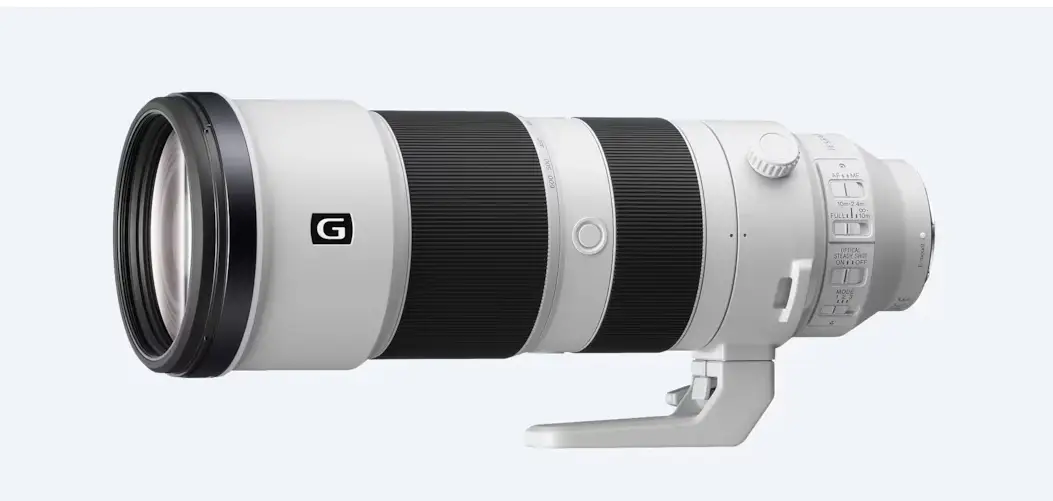
- 500mm–600mm lenses – Ideal for advanced birders who shoot shy or distant species. Examples include the Sony 200–600mm G OSS or Nikon Z 180–600mm.
- Prime lenses (500mm f/4, 600mm f/4) – Deliver superior sharpness and low-light performance but are expensive and heavy. Perfect for professionals and researchers.
Pro Tip: For crop-sensor cameras, multiply your lens focal length by 1.5 (Nikon/Sony) or 1.6 (Canon APS-C). A 400mm lens gives you an effective reach of 600mm+!
3. Aperture: The Light Factor
A wider aperture (like f/4 or f/5.6) lets in more light and gives a beautiful background blur that isolates the bird from its surroundings.
However, wider apertures increase cost and weight.
- Budget-friendly options: Lenses like the Sigma 150–600mm f/5–6.3 Contemporary strike a good balance between price and performance.
- Premium choices: Canon RF 100–500mm f/4.5–7.1L IS or Sony 600mm f/4 GM OSS deliver professional quality in all lighting conditions.
4. Image Stabilization: A Must for Birders
Even the steadiest hands struggle with long focal lengths. Image Stabilization (IS/VR/OSS) minimizes shake and ensures crisp shots, especially when handholding or shooting in windy conditions.
If your lens doesn’t have stabilization, pair it with a sturdy tripod or a gimbal head for smoother tracking of flying birds.
5. Autofocus and Tracking Speed
Birds rarely sit still. Lenses with fast and silent autofocus motors — such as Canon’s USM, Nikon’s AF-S, or Sony’s XD Linear motors — are best for tracking movement.
When comparing lenses, check:
- AF speed (especially for mirrorless bodies)
- Tracking reliability in low light or forest cover
- Compatibility with your camera’s autofocus system
6. Weight and Portability in the Field
The perfect lens won’t help if it’s too heavy to carry on a trail.
- Zoom lenses (100–400mm / 150–600mm) offer versatility and lighter builds.
- Prime lenses (500mm / 600mm) offer unmatched quality but may require monopods or tripods.
If you often trek or bird in hilly terrain like Tenga Valley or Sela Pass, choose a lighter setup. A mirrorless body with a 100–400mm lens strikes the perfect balance for travel birders.
7. Teleconverters: Extend Your Reach
Teleconverters (1.4x or 2x) increase your focal length — turning a 400mm lens into 560mm or even 800mm.
However, they reduce light and may slightly affect autofocus speed. They’re best paired with bright lenses (f/4–f/5.6).
8. Budget and Long-Term Investment
Lens prices can vary widely — from ₹50,000 to over ₹10 lakhs.
If you’re just starting:
- Begin with a 150–600mm zoom lens (Tamron or Sigma).
- Upgrade later to a professional prime lens as your skills and needs evolve.
Think of lenses as long-term investments — they retain value far longer than camera bodies.
9. Recommended Bird Photography Lenses (2025)
For Beginners:
- Nikon Z 180–600mm f/5.6–6.3 VR
- Canon RF 100–400mm f/5.6–8 IS
- Sigma 150–600mm f/5–6.3 C
For Advanced Birders:
- Sony 200–600mm f/5.6–6.3 G OSS
- Canon RF 100–500mm f/4.5–7.1L IS
- Nikon 500mm f/5.6E PF ED VR
For Professionals:
- Canon RF 600mm f/4L IS USM
- Nikon Z 600mm f/4 TC VR S
- Sony 600mm f/4 GM OSS
10. Final Thoughts
Choosing the right lens is about balancing reach, quality, and comfort.
Start with a zoom lens to learn the art of composition and patience. As you refine your craft, invest in faster and sharper lenses that match your style of birding.
Remember — the best lens is the one you’ll actually take into the field.
So whether you’re photographing a Golden-throated Barbet calling from a mossy branch, or a Himalayan Cutia dancing in the canopy, let your lens bring every feather to life.

- Type of Lens: The Canon RF 75–300mm F4–5.6 is a versatile telephoto zoom lens, ideal for capturing distant subjects in w…
- Focal Range: With a 75–300mm range, this lens offers extended reach, allowing for tight framing and compression of dista…
- Aperture: A variable aperture of f/4 to f/5.6 balances depth of field and light intake, suitable for daylight and modera…


- Compact, Lightweight and High-Quality RF Lens with a Versatile Zoom Range of 24-105mm*.
- Optical Image Stabilization at up to 5 Stops** of Shake Correction.
- Maximum Magnification of 0.4x and Minimum Focusing Distance of 0.66 ft. in Auto Focus.

- The Canon RF 85mm f/2 Macro IS STM Telephoto Lens is designed for exceptional portrait and macro photography. Its 85mm f…
- Lens Type: Canon RF 85mm f/2 Macro IS STM is a prime lens offering a versatile 85mm focal length, f/2 aperture, macro ca…
- Focal Length: 85mm, providing a telephoto reach perfect for portraits and detailed macro shots.

- The RF200-800mm f/6.3-9 IS USM delivers exceptional image quality throughout its super telephoto focal range while maint…
- Type of lens: Telephoto Zoom
- Focal Range: 200mm to 800mm

- 24-70mm focal length, 38.4-112mm equivalent focal length on Canon APS-C cameras
- F2.8 constant maximum aperture
- F22 minimum, Ring-type ultrasonic-type AF motor with full-time manual focusing

- Powerful DX format 5.8x zoom lens with 18-105 millimeter focal range (35 millimeter and Nikon FX format equivalent of 27…
- Wide to telephoto zoom range – perfect for everything from portraits to interiors, architecture and landscapes
- Vibration Reduction stabilisation system enables more flexible hand-held shooting and lets you use shutter speeds that a…

- Maximum magnification of 0.32x and a minimum focusing distance of 1.6′
- Aperture range from f/3.5 to f/22, Compatible format(s): DX, FX in DX Crop Mode
- Angle of view from 76 to 520′

- Camera compatibility: Compatible with FX and DX format Nikon Z series mirrorless (28mm-75mm on a full frame FX format Z …
- Lightweight and compact: Nearly 30% lighter than the NIKKOR Z 24-70mm f/2.8 S and it’s just 4.8 inches long when retract…
- Fast constant aperture of f/2.8 through the entire zoom range: Giving you more control of light, depth of field, range o…

- Camera compatibility: Compatible with FX and DX format Nikon Z series mirrorless.

- Camera compatibility: Compatible with FX and DX format Nikon Z series mirrorless (24mm-120mm on an FX format Z camera), …
- Close focusing: Show the smallest details by getting as close as 1.15 ft. from your subject at any zoom position, includ…
- Autofocus: Autofocus is split between two high-speed, ultra-quiet STM stepping motors, enabling close focusing, edge-to-…