How to Choose the Best Birding Books: A Guide for Every Nature Enthusiast
When it comes to birdwatching, a good pair of binoculars or a spotting scope may show you the bird — but a good birding book helps you truly understand it.
From identifying species to learning calls, behavior, and habitats, birding books are a birder’s lifelong companions. With hundreds of titles available, choosing the right ones can be tricky. This guide will help you find the perfect birding books for your needs — whether you’re a curious beginner or an experienced field birder.
1. Why Every Birder Needs a Good Book
In an age of digital apps and instant photos, you might wonder if books still matter.
They absolutely do.
A birding book, whether a field guide or a reference work, gives depth, accuracy, and regional detail that most apps can’t match. You can flip through pages to compare species, note subtle differences, and appreciate each bird’s story — something that connects birders more deeply with nature.
Books also encourage slower, more thoughtful observation, helping you recognize patterns in plumage, song, and habitat that apps can often overlook.
2. Decide the Type of Birding Book You Need
Before buying, it’s essential to know what kind of birding book will suit your goals.
There are three main types:
a. Field Guides
Compact, visual books designed for use in the field.
They feature:
- Illustrations or photos of birds
- Maps showing distribution
- Notes on habitat, calls, and behavior
Best for: Birders who travel, identify on the go, or explore diverse regions like the Eastern Himalayas or Western Ghats.
Popular Choices:
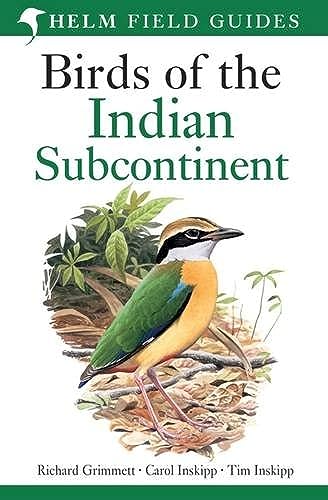
- Birds of the Indian Subcontinent by Richard Grimmett, Carol Inskipp & Tim Inskipp
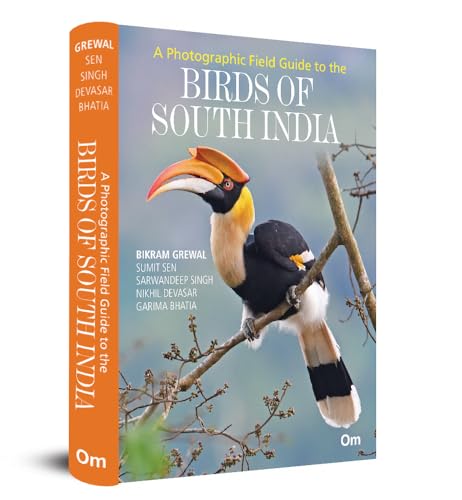
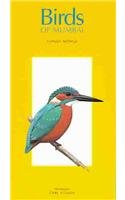
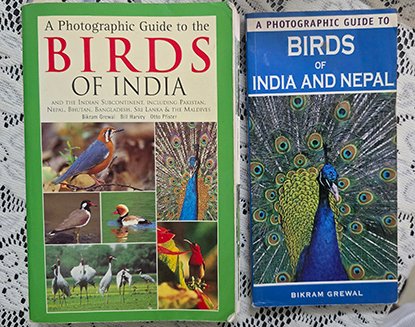
- A Pictorial Guide to the Birds of the Indian Subcontinent by Bikram Grewal
b. Reference Books
These are comprehensive works meant for home or study.
They include:
- Detailed accounts of species
- Migration and breeding data
- Regional checklists and behavior studies
Best for: Birders who enjoy research or maintain detailed birding logs.
Top Picks:
- Handbook of the Birds of the World series
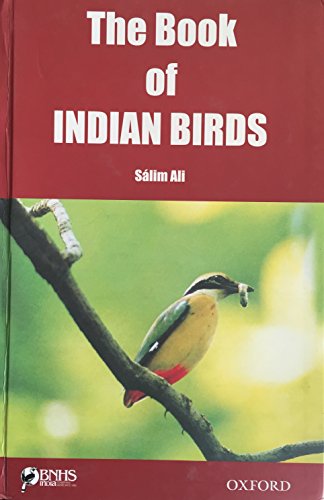
- The Book of Indian Birds by Salim Ali (a timeless classic)
c. Field Notebooks and Journals
Sometimes the best book is the one you write yourself.
Keeping a birding journal helps you document observations, sketches, and thoughts from the field. It deepens your learning and makes each birding journey more personal.
Tip: Choose waterproof or hardcover journals for field durability — ideal for trips to humid forests or misty hill stations.
3. Regional Relevance Matters
For birders in India and the Himalayas, regional accuracy is key.
Many global guides miss local subspecies or variations.
Look for books that focus specifically on your region — like Birds of Northeast India or Birds of Bhutan and the Eastern Himalayas.
If you’re birding around Arunachal Pradesh, Shergaon, or the Rupa River, regional books will help identify endemics like the Bugun Liocichla or Ward’s Trogon — species rarely detailed in global guides.
4. Illustrations vs. Photographs: Which to Choose
- Illustrated guides (like Grimmett & Inskipp) show consistent poses and lighting, making comparison easier.
- Photographic guides offer realism and are great for understanding color variation under natural light.
Best advice:
Have one of each! An illustrated guide for quick ID and a photographic one for detailed study.
5. Portability and Layout
A good field guide should be light, easy to flip through, and well-organized.
Look for:
- Clear color coding (by bird families or habitats)
- Waterproof or laminated covers for durability
- Size that fits easily in a backpack or birding vest
Books like Pocket Guide to the Birds of the Indian Subcontinent are excellent for travel and field use.
6. Cross-Referencing with Apps
Modern birders often use books alongside apps like Merlin Bird ID or eBird.
This hybrid approach offers the best of both worlds — instant sound recognition from apps and the deeper learning that comes from a book.
When your book and app descriptions align, you’ll develop stronger field identification skills — grounded in both knowledge and intuition.
7. Recommended Birding Books for Indian Birders
If you’re birding in India or South Asia, these are must-haves:
- Birds of the Indian Subcontinent – Grimmett, Inskipp & Inskipp
- The Book of Indian Birds – Salim Ali
- Birds of Bhutan and the Eastern Himalayas – Inskipp, Inskipp & Grimmett
- Field Guide to the Birds of the Eastern Himalayas – Norman Arlott
- Birds of South Asia: The Ripley Guide – Rasmussen & Anderton
Each combines scientific precision with field practicality — ideal for both explorers and backyard birders.
8. Final Thoughts
Choosing the right birding book isn’t about buying the most popular one — it’s about finding the book that resonates with your way of observing.
Whether you prefer field sketches, detailed notes, or glossy photos, the right guide becomes your constant companion — a trusted mentor through every forest, riverbank, and mountain trail.
As you turn each page, you’re not just identifying birds — you’re learning their language, their rhythms, and your place in their world.
Discover how to choose the perfect birding books and field guides. Learn about field, reference, and regional guides, and find the best bird books for India and the Himalayas.